
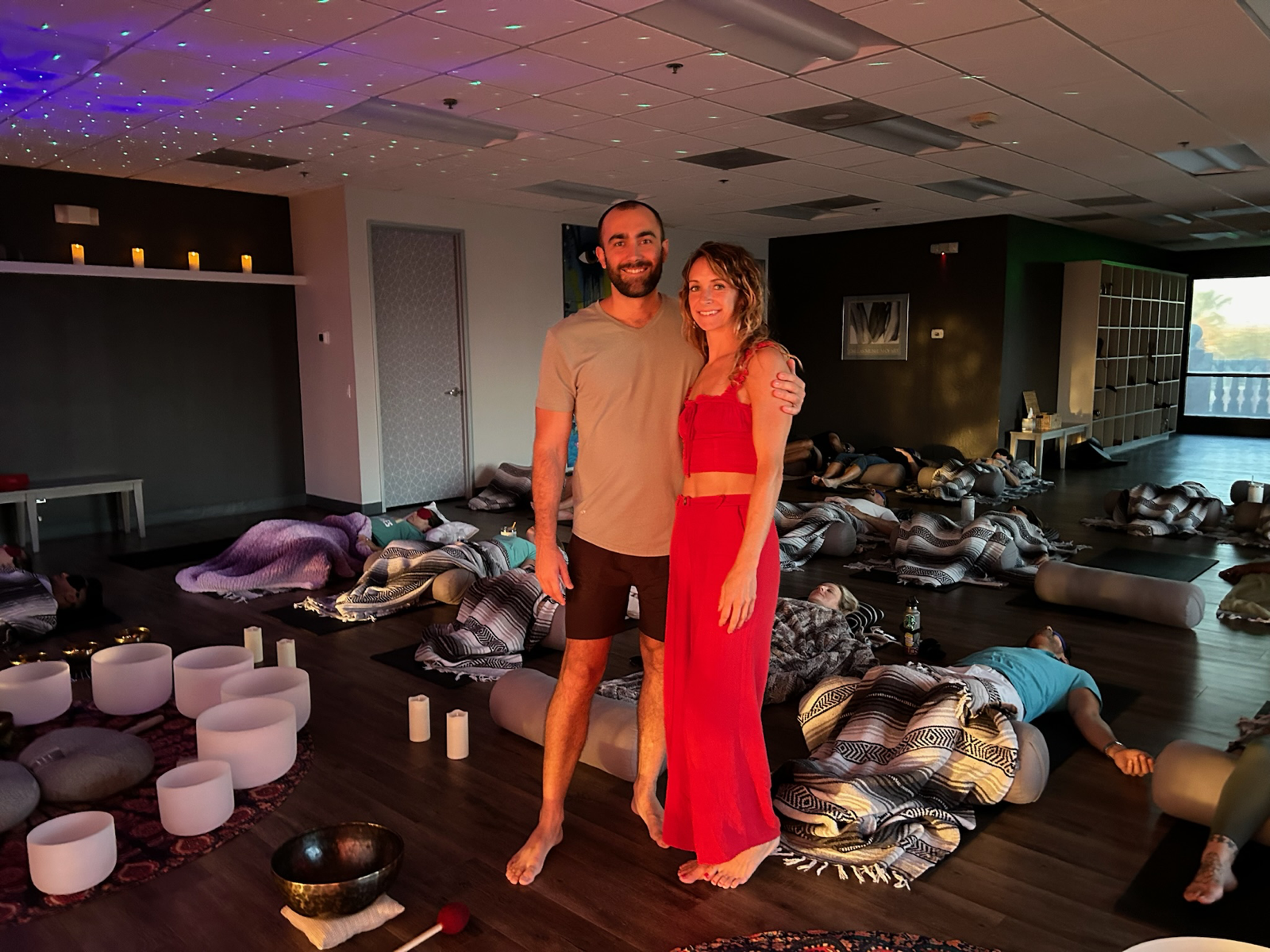
Why Breathwork Certification Matters (And Why Choosing the Right One Is Hard)
Let me be upfront: I run a Breathwork certification program. So you might be thinking, "Of course he's going to say his is the best." I'm not going to do that. What I am going to do is give you an honest breakdown of 10 programs, including ours, so you can make a decision based on real information instead of marketing hype.
The Breathwork industry is booming. More people than ever are discovering the transformative power of conscious breathing, and with that demand comes a growing need for skilled, well-trained facilitators. Studios, retreat centers, corporate wellness programs, and private clients are all looking for qualified Breathwork practitioners. That's the good news.
The tricky part? There's no single governing body for Breathwork certification. Unlike becoming a licensed therapist or a certified yoga teacher through Yoga Alliance, the Breathwork space is largely unregulated. That means the quality of training programs varies enormously, from weekend crash courses that hand you a certificate and send you on your way, to rigorous multi-month programs with mentorship, practicum hours, and real accountability.
This lack of standardization makes choosing a program confusing. You'll find prices ranging from under $400 to over $8,000. Some programs are entirely online; others require you to fly to Bali. Some include business training; most don't. Some have accreditation from recognized bodies; many don't.
I've spent years in this industry, training under multiple teachers, building my own practice from zero, and eventually creating a certification program because I saw gaps that weren't being filled. That experience gives me a perspective I think is genuinely useful here, not because I have all the answers, but because I've been in the trenches and I know what actually matters when you're starting out as a facilitator.
So let's get into it. Here's what to look for, followed by an honest review of 10 programs that I think are worth your consideration.
What to Look For in a Breathwork Certification Program
Before you start comparing programs, get clear on what actually matters. Not every program needs to check every box, but understanding these criteria will help you evaluate which trade-offs you're willing to make.
Accreditation and Recognition
Since there's no universal Breathwork licensing board, accreditation comes in different forms. Some programs are approved by NCBTMB (National Certification Board for Therapeutic Massage and Bodywork) for continuing education credits. Others carry Yoga Alliance YACEP (Yoga Alliance Continuing Education Provider) designation. A few have affiliations with universities or established wellness organizations. Accreditation isn't everything (some excellent programs have none), but it can matter for insurance purposes, employer credibility, and professional development requirements in related fields.
Curriculum Depth
What are they actually teaching you? A solid program should cover the anatomy and physiology of breathing, nervous system science, multiple Breathwork techniques, contraindications and safety protocols, how to hold space and manage emotional releases, and session design. Be wary of programs that lean heavily on a single technique with minimal science or safety training. You're going to be working with people's bodies and emotions. The depth of your training matters.
Business and Marketing Training
This is the one that most programs skip, and it's the one that determines whether you actually build a career or just have a nice certificate on your wall. Can you price your services? Do you know how to get clients? Can you build an email list, run a workshop, or pitch yourself to a studio? The best Breathwork facilitator in the world won't make a living if nobody knows they exist. I'm biased here because business training is a core part of our program, but I include it because I watched too many talented graduates from other programs struggle to get their first paying client.
Mentorship and Community
Learning Breathwork from pre-recorded videos is fine for intellectual understanding, but facilitation is a relational skill. You need feedback. You need to practice with real people and have someone experienced tell you what you're doing well and where you need to grow. Look for programs that include live mentorship, practice teaching opportunities, and an ongoing community of peers. The relationships you build during training often become your professional network for years to come.
Price and Value
Cheaper isn't always worse, and expensive isn't always better. A $395 online program might be perfect if you're an experienced yoga teacher adding Breathwork to your existing skill set. A $6,800 immersive retreat might be the right investment if you want a transformative personal experience alongside your training. What matters is whether the price aligns with what you're getting: hours of instruction, mentorship access, practice opportunities, materials, and ongoing support.
Teaching Style and Philosophy
Breathwork is not one thing. Some approaches are rooted in spiritual tradition; others are clinically oriented. Some emphasize cathartic, high-intensity experiences; others prioritize gentle, trauma-informed practices. Some programs teach a single modality; others expose you to multiple styles. Think about who you want to serve and how you want to show up as a facilitator. Your training should align with the kind of practitioner you want to become.
The 10 Best Breathwork Certification Programs in 2026
I've organized these alphabetically to avoid any implied ranking. Each program has genuine strengths, and the "best" one depends entirely on your situation, goals, and preferences.
1. Alchemy of Breath
Alchemy of Breath is a premium, retreat-based certification program founded by Anthony Abbagnano. Their flagship training is a 21-day immersive experience held in locations like Tuscany and Bali. The program emphasizes deep personal transformation alongside professional training, and the retreat format means you're living, breathing, and eating this work for three straight weeks.
The curriculum draws on connected breathing (continuous circular breath), emotional processing, and somatic awareness. There's a strong spiritual component, and the immersive format creates a container that's hard to replicate in a weekly online class. Graduates often describe the experience as life-changing on a personal level, not just professionally.
Pros:
- Deeply immersive format that combines personal transformation with professional training
- Beautiful retreat locations create a powerful learning environment
- Strong emphasis on personal process work alongside facilitation skills
- Well-established brand with an international community of graduates
- Comprehensive curriculum covering connected breathing, emotional release, and session design
Cons:
- Premium pricing (approximately $6,800, not including travel) puts it out of reach for many
- Requires 21 days away from work and family, which isn't feasible for everyone
- Limited business/marketing training; the focus is on the practice itself
- You'll need additional mentorship and practice hours after the retreat to feel fully ready
Price: ~$6,800 (not including travel and accommodation at some locations)
Duration: 21 days immersive
Format: In-person retreat
Best for: People who want a transformative retreat experience and can invest the time and money. Ideal if personal depth work is as important to you as professional skills.
2. Biodynamic Breathwork & Trauma Release System (BBTRS)
BBTRS, founded by Giten Tonkov, is a body-oriented approach that integrates Breathwork with movement, touch, sound, emotional expression, and meditation. It's specifically designed for trauma release, drawing on principles from somatic experiencing, bioenergetics, and other body-based therapies. The training is multi-tiered, starting with foundational modules and progressing through advanced practitioner levels.
What sets BBTRS apart is its integration of multiple modalities. You're not just learning breathing techniques. You're learning how to work with the body as a whole system, using breath as the primary gateway but incorporating touch, movement, and sound to support the release process. This makes it particularly relevant for bodyworkers, massage therapists, and somatic practitioners.
Pros:
- Highly somatic approach that integrates breath with bodywork, movement, and sound
- Strong trauma-informed framework rooted in body-based therapy principles
- Multi-tiered training allows you to deepen over time without committing to everything upfront
- Well-suited for practitioners who already work with the body (massage therapists, somatic practitioners)
- International training locations and a growing global community
Cons:
- The full certification path requires multiple modules over an extended period, which means higher total investment
- Less focused on Breathwork as a standalone practice; the multi-modality approach may feel diffuse for some
- Limited business training component
- Requires in-person attendance for most modules
Price: ~$2,500-$5,000+ (varies by module and level)
Duration: Multi-module, typically 6-12 months for full certification
Format: In-person (various international locations)
Best for: Bodyworkers, massage therapists, and somatic practitioners who want a trauma-focused, body-oriented approach to Breathwork.
3. Breath of Bliss
Breath of Bliss, created by Christabel Zamor, takes a community-centered, ceremonial approach to Breathwork. The program emphasizes the sacred dimension of breathing, weaving in music, ritual, and connection as core elements of the practice. Christabel is a musician and performer, and that artistic sensibility runs through the entire training. Sessions feel more like ceremonies than clinical interventions.
The facilitator training is designed for people who want to create transformative group experiences that feel deeply held, musical, and communal. If you've been to a Breath of Bliss session, you know the vibe: curated playlists, intentional opening and closing rituals, and an emphasis on the collective energy of the group.
Pros:
- Unique ceremonial approach that sets graduates apart in the market
- Strong emphasis on music curation and the art of holding space
- Warm, heart-centered community with genuine connection among participants
- Training is experiential and creative, not just academic
- Good for facilitators who want to create distinctive, memorable group experiences
Cons:
- The ceremonial/sacred framing won't resonate with everyone (or every client base)
- Less emphasis on clinical science and nervous system education
- Limited business training
- May not prepare you as well for one-on-one or clinical settings
Price: ~$3,000-$4,500 (varies by training location and format)
Duration: Approximately 3-4 months
Format: Hybrid (in-person intensives + online components)
Best for: People drawn to a ceremonial, music-driven, community-focused approach to Breathwork facilitation. Great for those who see Breathwork as a sacred practice.
4. David Elliott's Healer Training
David Elliott is one of the OG figures in the modern Breathwork movement, particularly in the Los Angeles wellness scene. He's been teaching Breathwork for over two decades, and his approach is rooted in what he calls "pranayama healing," a practice that combines conscious breathing with energetic healing and spiritual development. His healer training is designed for people who feel called to a healing path, not just people who want to add a service to their business.
David's style is distinctly spiritual. He talks about energy, healing gifts, and the healer's journey in a way that resonates deeply with some people and feels too esoteric for others. If you're drawn to the spiritual/healer archetype and want to study under someone with genuine lineage in this work, David's training is worth serious consideration.
Pros:
- Learning from a true pioneer with 20+ years of experience
- Deep spiritual lineage and a well-developed teaching methodology
- Los Angeles based, with access to a large and established community
- Emphasis on the practitioner's own healing journey as the foundation for serving others
- Strong track record of graduates who've built thriving practices
Cons:
- Heavily spiritual/esoteric framing won't appeal to everyone
- LA-based, which limits accessibility for those outside Southern California
- Less emphasis on modern neuroscience and evidence-based frameworks
- Limited structured business training
- The "healer" positioning may feel alienating if you see yourself more as a wellness professional
Price: ~$2,500-$4,000 (varies by training level)
Duration: Varies; foundational training is several weekends over a few months
Format: In-person (Los Angeles)
Best for: People who feel genuinely called to a spiritual healing path and want to train under an experienced, lineage-holding teacher.
5. Liquid Breathwork
Full transparency: this is our program. I'm going to give you the same honest breakdown I've given every other program on this list, including our real limitations.
Liquid Breathwork Certification is a surrender-based Breathwork training program based in Arizona. We teach a style that emphasizes releasing control and allowing the body's natural intelligence to guide the process, which is different from more directive or technique-heavy approaches. Our program is designed for people who want to become skilled facilitators and actually build a career doing this work.
What makes our program different from most is the business training component. We dedicate real time to marketing, client acquisition, pricing, and building a sustainable practice because I watched too many talented practitioners struggle to get off the ground after completing trainings that only taught the Breathwork itself. We also keep cohorts intentionally small so that every trainee gets direct mentorship and feedback.
Pros:
- Dedicated business and marketing training built into the curriculum (not an afterthought)
- Small cohort sizes mean personalized mentorship and real feedback on your facilitation
- Surrender-based approach offers a gentler, more accessible style for diverse client populations
- NCBTMB-approved for continuing education credits
- Competitive pricing relative to the depth of training provided
- Ongoing alumni community and support beyond graduation
Cons:
- We're a newer program compared to some on this list, which means fewer total graduates and less brand recognition
- Arizona-based in-person components may not be convenient for everyone
- Our surrender-based approach is less structured than some people prefer; if you want a rigid protocol to follow, this may not be the right fit
- Smaller company means fewer resources than large-scale programs
Price: $1,697 early bird / $1,997 regular
Duration: Multi-week training program
Format: Hybrid (in-person in Arizona + online components)
Best for: Practitioners who want a gentler, surrender-based approach combined with real business skills to actually build a practice. Particularly good if you value small-group mentorship over large-scale programs. Learn more about our certification program.
6. Loka Yoga School
Loka Yoga School offers one of the most affordable Breathwork certification programs available, at just $395. It's a fully online program designed primarily as a continuing education credential for yoga teachers, though it's open to anyone. The curriculum covers pranayama foundations, modern Breathwork techniques, anatomy, and basic facilitation skills.
At this price point, you're obviously not getting the depth of a multi-month immersive program. But that's not the point. If you're already a yoga teacher or wellness professional and you want to add Breathwork to your existing offerings with a recognized credential (Yoga Alliance YACEP), Loka gives you a solid foundation without a massive financial commitment.
Pros:
- Extremely affordable at $395, making it accessible to almost anyone
- Yoga Alliance YACEP designation provides recognized continuing education credits
- Fully online and self-paced, so you can complete it on your own schedule
- Good foundational coverage of both traditional pranayama and modern Breathwork techniques
- Low-risk way to explore Breathwork facilitation before committing to a larger program
Cons:
- Limited depth; this is an introduction, not a comprehensive facilitator training
- No live mentorship, practice teaching, or feedback on your facilitation skills
- Self-paced format means no cohort community or peer connections
- No business training component
- May not be sufficient as a standalone credential for marketing yourself as a Breathwork facilitator
Price: $395
Duration: Self-paced (typically completed in a few weeks)
Format: Online
Best for: Yoga teachers and existing wellness professionals who want an affordable, recognized credential to add Breathwork to their current offerings. Also good as a first step before investing in a more comprehensive program.
7. Neurodynamic Breathwork (Breathwork Online)
Neurodynamic Breathwork, run by Michael Stone, is an online facilitator training program that positions itself at the intersection of Breathwork and consciousness exploration. The approach draws on principles from holotropic breathwork (Stanislav Grof's pioneering work) while making the practice more accessible through an online format. The training emphasizes expanded states of consciousness, inner healing intelligence, and the transformative potential of connected breathing.
The program is well-organized, with a clear curriculum that moves from foundational breathing science through facilitation skills and practicum hours. What's distinctive is their positioning: they openly acknowledge the overlap between Breathwork and psychedelic/consciousness research, which attracts a particular kind of practitioner.
Pros:
- Fully online format makes it accessible regardless of location
- Strong intellectual foundation drawing on Grof's holotropic breathwork lineage
- Interesting positioning at the intersection of Breathwork and consciousness exploration
- Well-structured curriculum with clear progression
- Regular online group Breathwork sessions provide ongoing practice opportunities
Cons:
- Fully online means you miss the depth of in-person practice and hands-on feedback
- The psychedelic-adjacent positioning may not align with your professional goals
- Limited hands-on facilitation practice compared to in-person programs
- Less emphasis on gentle or trauma-informed approaches
Price: ~$1,500-$2,500 (varies by program level)
Duration: 3-6 months
Format: Online
Best for: Practitioners interested in consciousness exploration and expanded states who want a well-structured online program with intellectual depth. Especially relevant if you're drawn to the holotropic breathwork tradition.
8. Pause Breathwork
Pause Breathwork, founded by Samantha Skelly, is a well-known online certification program with a strong trauma-informed approach. The program has positioned itself effectively in the clinical/therapeutic space, attracting therapists, counselors, and healthcare professionals alongside wellness practitioners. It's a 6-month program that combines self-paced learning with live calls, mentorship, and practicum requirements.
Pause has strong marketing and brand recognition in the Breathwork certification space. They've invested heavily in building their reputation, and their graduates tend to speak highly of the training quality. The program covers breathwork science, trauma-informed facilitation, nervous system education, and session design.
Pros:
- Strong trauma-informed framework that appeals to clinicians and therapists
- Well-established brand with significant industry recognition
- 6-month format allows for deep learning and integration over time
- Online format with live components balances accessibility with community
- Strong alumni network and ongoing professional development opportunities
- Attracts a serious, professional cohort of fellow trainees
Cons:
- Higher price point relative to some comparable online programs
- Online-only format means no in-person practice or hands-on facilitation feedback
- The clinical/therapeutic positioning may feel overly serious for those drawn to the spiritual or ceremonial side of Breathwork
- Business training is present but not as central as in some programs
Price: ~$3,000-$5,000 (varies by enrollment period and payment plan)
Duration: 6 months
Format: Online (with live components)
Best for: Therapists, counselors, and healthcare professionals who want a trauma-informed, clinically credible Breathwork certification. Also good for anyone who wants a well-structured, reputable online program.
9. SOMA Breath
SOMA Breath, founded by the late Niraj Naik, is one of the largest Breathwork certification programs globally. It's built around a specific methodology that combines rhythmic breathing, breath retention, and music-guided sessions. The program is primarily online and can be completed relatively quickly compared to many alternatives, making it attractive for people who want to get certified and start teaching without a long training commitment.
SOMA has built a massive community, with thousands of certified instructors worldwide. They've been effective at creating a recognizable brand and a scalable training model. The technique itself is distinctive, combining elements of pranayama, intermittent hypoxia training, and guided meditation into a structured session format.
Pros:
- Large global community means built-in networking and peer support
- Fast certification timeline (can be completed in weeks)
- Distinctive, well-defined technique gives you a clear offering from day one
- Strong online platform with well-produced training materials
- Affordable relative to many in-person programs
- Music-integrated sessions are popular and accessible for beginners
Cons:
- Fast timeline raises questions about depth; some graduates report feeling underprepared for edge cases
- Teaches a single proprietary method rather than a broader foundation in Breathwork
- Online-only format limits hands-on practice and personalized feedback
- Large cohort sizes mean less individual mentorship
- The rapid certification model has drawn some criticism in the industry regarding facilitator readiness
Price: ~$1,500-$2,500 (varies by level and enrollment period)
Duration: Can be completed in a few weeks to a few months
Format: Online
Best for: People who want a quick, affordable online certification with a large community and a clearly defined technique. Good starting point, though many graduates pursue additional training later.
10. Somatic Breathwork / Soma+IQ
Soma+IQ stands out in the certification landscape for its university-level accreditation through Arizona State University. This is, to my knowledge, one of the few (if not the only) Breathwork certification programs with legitimate university backing. The program takes a science-forward, somatic approach, integrating Breathwork with neuroscience, somatic psychology, and clinical research.
If academic credibility and evidence-based practice are your top priorities, Soma+IQ is worth a close look. The ASU affiliation adds a layer of legitimacy that no other program on this list can match, and their curriculum reflects a rigorous, research-informed approach to Breathwork education.
Pros:
- ASU accreditation provides unmatched academic credibility in the Breathwork space
- Science-forward curriculum grounded in neuroscience and somatic psychology
- Arizona-based, with in-person training components
- Strong for practitioners who want to position themselves in clinical, medical, or academic settings
- The university backing may help with insurance, institutional partnerships, and professional credibility
Cons:
- The clinical/academic orientation may feel less experiential or transformative than other programs
- Higher price point, reflecting the university affiliation
- Arizona-based in-person requirements limit accessibility
- Newer program, so the graduate community is still developing
- Less emphasis on the spiritual or ceremonial dimensions of Breathwork
Price: ~$3,500-$5,000+ (varies by program track)
Duration: Several months
Format: Hybrid (in-person in Arizona + online)
Best for: Practitioners who prioritize academic credibility and evidence-based training. Especially relevant for those wanting to work in clinical, medical, or institutional settings where university-accredited credentials matter.
Side-by-Side Comparison
Here's a quick reference table to compare key details across all 10 programs. Use this alongside the detailed reviews above to narrow down your options.
| Program | Price | Duration | Format | Accreditation | Business Training |
|---|---|---|---|---|---|
| Alchemy of Breath | ~$6,800 | 21 days | In-Person | None (own certification) | No |
| BBTRS | $2,500-$5,000+ | 6-12 months | In-Person | Own certification (multi-tier) | No |
| Breath of Bliss | ~$3,000-$4,500 | 3-4 months | Hybrid | None (own certification) | No |
| David Elliott | ~$2,500-$4,000 | Several months | In-Person | None (own certification) | No |
| Liquid Breathwork | $1,697-$1,997 | Multi-week | Hybrid | NCBTMB approved | Yes |
| Loka Yoga School | $395 | Self-paced | Online | Yoga Alliance YACEP | No |
| Neurodynamic Breathwork | ~$1,500-$2,500 | 3-6 months | Online | None (own certification) | No |
| Pause Breathwork | ~$3,000-$5,000 | 6 months | Online | Own certification | Partial |
| SOMA Breath | ~$1,500-$2,500 | Weeks to months | Online | Own certification | No |
| Soma+IQ | ~$3,500-$5,000+ | Several months | Hybrid | ASU accredited | No |
How to Choose the Right Breathwork Certification for You
After reading through all of that, you might feel more confused than when you started. Ten programs, all with their own strengths and trade-offs. So let me simplify this with some practical guidance based on common situations I see.
Start With Your Goals
Why do you want to get certified? Your answer to this question should drive everything else. If you want to build a full-time Breathwork career, you need a program that teaches business skills alongside facilitation. If you're a therapist adding Breathwork to your clinical practice, trauma-informed training and accreditation matter most. If you're a yoga teacher expanding your toolkit, a lighter credential might be all you need to start.
Be Honest About Your Budget
A $6,800 retreat in Tuscany is an incredible experience, but if it puts you into debt and you can't invest in marketing your practice afterward, it's not a wise business decision. On the other hand, a $395 online course might be too thin to give you the confidence and skills you need to facilitate safely. Find the sweet spot where the investment is significant enough to take seriously but not so burdensome that it creates stress.
Consider Your Learning Style
Be honest about how you learn best. Some people thrive with self-paced online content. Others need the immersion and accountability of in-person training. Some want structure and clear protocols; others want space and flexibility. There's no wrong answer, but choosing a format that doesn't match your learning style is a recipe for frustration.
Think About Your Future Clients
Who do you want to serve? If you're drawn to working with trauma survivors, choose a trauma-informed program. If you want to work in corporate wellness, clinical credibility and evidence-based training matter more than spiritual depth. If you want to lead retreats and ceremonies, look for programs that emphasize facilitation artistry and group dynamics. Your training should prepare you for the specific work you want to do.
Talk to Graduates
This is the single most useful thing you can do before enrolling in any program. Find 2-3 graduates of each program you're considering and ask them: What did you love? What was missing? Did you feel ready to facilitate after completing the training? How has the credential helped (or not helped) your career? Honest answers from real graduates will tell you more than any sales page ever could.
Trust Your Gut
This might sound like odd advice in a comparison article, but it matters. You're choosing a program that will shape how you hold space for other human beings. The teacher's voice, the community's energy, the philosophy's resonance, these things matter. If something feels off, listen to that. If something lights you up, pay attention. The right program should feel like a genuine fit, not just a logical choice.
Frequently Asked Questions About Breathwork Certification
What is the best breathwork certification?
There is no single "best" Breathwork certification. The right program depends on your specific goals, budget, learning style, and the population you want to serve. Programs like Liquid Breathwork and Pause Breathwork are strong for practitioners who want business and trauma-informed training, while Alchemy of Breath offers a deeply immersive retreat experience. Soma+IQ stands out for university-backed academic credibility. The best program is the one that aligns with where you are now and where you want to go as a practitioner.
How much does breathwork certification cost?
Breathwork certification programs range from approximately $395 to $8,000 or more. Online-only programs tend to be on the lower end ($395-$2,500), while immersive retreat-based programs like Alchemy of Breath can cost $6,800 or more before travel expenses. Most mid-range programs fall between $1,500 and $3,500. Many programs offer payment plans to make the investment more accessible. Remember to factor in additional costs like travel, accommodation (for in-person programs), books/materials, and the marketing investment you'll need to build your practice after graduating.
Do you need a certification to teach breathwork?
Legally, no. Breathwork is an unregulated industry in most countries, and there is no government-mandated license required to teach. However, certification is strongly recommended for several practical reasons. First, it ensures you can hold space safely for participants, especially during intense emotional releases or physical sensations. Second, it builds credibility with clients, studios, and retreat centers. Third, many liability insurance providers require proof of training before they'll cover you. Fourth, it deepens your own understanding of the practice in ways that self-study alone can't match. Could you learn enough to lead a basic breathing exercise without certification? Probably. Should you facilitate deep Breathwork sessions without proper training? Absolutely not.
How long does breathwork certification take?
Breathwork certification timelines vary widely. Some online programs like SOMA Breath can be completed in as little as a few weeks. Comprehensive programs typically run 3 to 6 months, allowing time for learning, integration, practice teaching, and mentorship. Immersive retreat-based programs like Alchemy of Breath condense training into 21 days of intensive study. Programs that include practicum hours and multiple levels of certification (like BBTRS) may take 6-12 months or longer. In general, faster isn't necessarily better; the programs that include meaningful practice teaching, mentorship, and integration time tend to produce more confident, competent facilitators.
Is breathwork certification worth it?
For most people who want to teach Breathwork professionally, yes. A quality certification gives you four things that are hard to acquire on your own: the technical skills to facilitate safely, the confidence to lead sessions without second-guessing yourself, the credibility to attract clients and partnerships, and often the business training to build a sustainable practice. The Breathwork industry is growing rapidly as more people discover the practice, and certified facilitators are in demand at studios, wellness centers, corporate offices, and retreats worldwide. That said, certification alone doesn't guarantee success. You still need to put in the work of building your brand, gaining experience, and developing your unique voice as a facilitator. The certificate opens doors, but you have to walk through them.
Final Thoughts
Choosing a Breathwork certification program is a significant decision, both financially and in terms of the direction it sets for your career. I hope this comparison has given you a clearer picture of what's available and what matters most when making your choice.
A few final reminders. No program is perfect. Every one on this list has genuine strengths and real limitations. The most important factor is not which program has the best marketing or the fanciest website. It's whether the training will prepare you to hold space safely, effectively, and authentically for the people who come to you looking for help.
If you have questions about any of these programs, including ours, feel free to reach out. I'm always happy to give honest advice, even if that means pointing you toward a different program that's a better fit for your situation. This industry grows when all of us do good work, and I'd rather you train somewhere that truly serves you than enroll in our program just because you read this article.
The world needs more skilled, well-trained Breathwork facilitators. Whatever path you choose, commit to the training, invest in your development, and never stop learning. Your future clients will thank you for it.
Interested in Liquid Breathwork Certification?
Learn more about our surrender-based training program with built-in business skills.